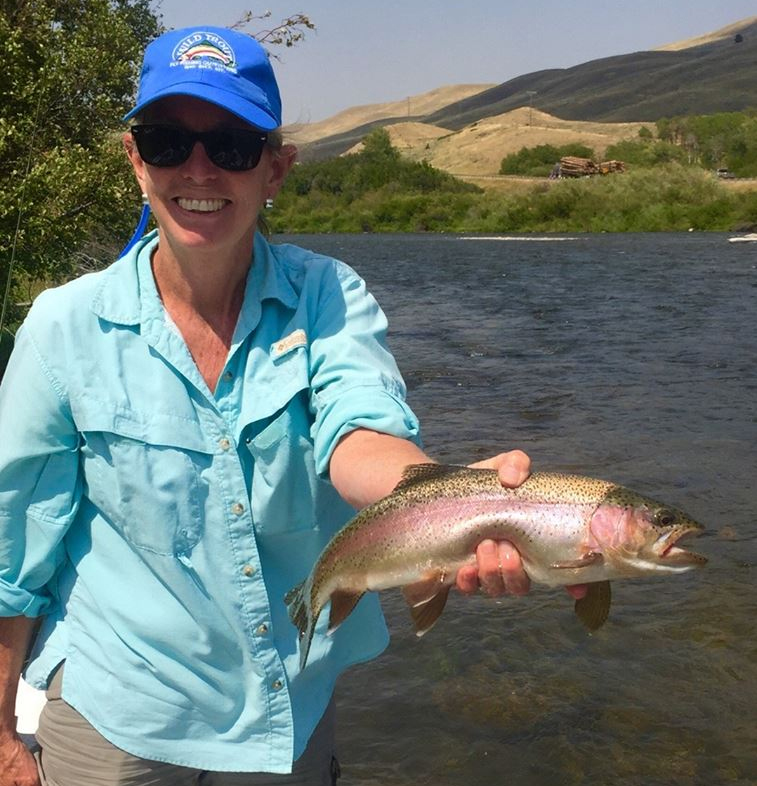
It’s terrestrial time! We’re experiencing solid dry fly fishing on all of our area rivers with grasshopper, beetle, and ant patterns, with the latter providing some consistent action lately. And with a cool front moving through the state over the next couple of days – along with some needed moisture – we’re anticipating a great weekend of fishing.
We may sound like a broken record, but as always, nymphing has been the top producer on all of our area rivers. The vast majority of trout are consuming the bulk of their calories below the surface – sure they may be enticed to rise to a juicy hopper or ant from time to time, but if your goal is to catch as many fish a possible you’ll want to stick with nymphing. Small baetis and midge patterns are the heavy hitters right now, but stonefly nymphs, October caddis pupa, and worms have had their moments. It’s low and clear out there and the fish have wised up a bit at this point in the season… lengthen your leaders a bit and run 4x and 5x tippet… fluorocarbon if you’ve got it.
But not everyone wants to nymph… we have all winter to do that. For the dry fly angler it’s all about smaller attractor patterns and the big three terrestrials: hoppers, ants and beetles. Words of advice:
- As tempting as it may be, don’t focus solely on the hopper. Ants, beetles, crickets and bees can be far more effective at times.
- Don’t get lulled into sticking with a pattern that isn’t working. Rotate through different sizes, colors, styles, and species.
- Twitch it – a little movement can really bring a terrestrial imitation to life and make all the difference.
- Sink it – larger trout in particular can be a bit hesitant to commit to a dry fly at times. A sunken hopper can be deadly.
- If you’re fortunate enough to experience a good “hopper wind”, be sure to fish the lee side bank… that is, cast into the wind and present your fly to the bank where hoppers are being blown into the river. When faced with a stiff breeze many anglers will make the mistake of turning their back to it for ease of casting.
- Stick with it, and as an insurance policy try trailing your dry with a nymph. Some of our guides will go so far as to run a nymph anywhere from 4- to 6-feet below a hopper.
- If you’re really dedicated to catching trout on the dry, fish a single dry fly. This allows for a better drift and also allows you to put your fly where it often needs to be… tight to undercut, grassy banks or along in-stream structure (boulders, etc.).
If your plans to fish in Montana this summer are impacted by river closures, give us a call and we can work with you to plan a revised itinerary that will exceed your expectations. Let one of our seasoned guides show you the ropes on the Gallatin River, Madison River, or within Yellowstone National Park.
GALLATIN RIVER FISHING REPORT
The Gallatin is fishing very well and has been our most consistent option. The dry fly bite has been good, and the nymph bite even better.
With the low flows and warm weather some of the most consistent fishing on the upper Gallatin has been along the seven mile stretch from Big Sky down to Karst. This reach of the river benefits from numerous springs that boost water levels and provide an influx of cold water – those familiar with the river know where these springs are. There are also a few notable tributaries that enter the river throughout this stretch including the West Fork, Deer Creek, and Portal Creek – fishing below the mouths of these cold-flowing tributaries can be productive.
At this point the only significant hatches on the horizon are fall baetis and October caddis, both of which will start to provide dry fly opportunities in September, weather permitting. Baetis nymphs are active in the river, and are an important food source for the river’s fish throughout August… in fact baetis nymphs are our top producers right now on any given day. Virtually any small (#18-20) baetis pattern will do the trick, but a few of our favorites include: Pheasant Tail, RS-2, Little Green Machine, WD-40, Transitional Dun, and Lightning Bug. Along with beatis, midge pupa patterns are effective at this time -with simple patterns such as the Zebra Midge taking their fair share of fish.
Spruce moths are tapering off on the Gallatin, but there are still enough around to attract the attention of trout early in the morning – but be prepared to work for moth eaters at this point… they can be few and far between. The mainstay terrestrial patterns – hoppers, ants, and beetles – are the primary attraction at this point, with the latter two providing the most consistent dry fly action. Hopper eats have been sporadic, and the action is day to day. A windy day on the meadow reaches of the upper river can provide good hopper fishing.
Give us a call today to book a day with one of our professional guides on the blue-ribbon waters of the upper Gallatin River.
Dries: Morrish Hopper #8-10, Grand Hopper #10-12, Dave’s Hopper #8-10, Parachute Hopper #8-12, Parachute Ant (Cinnamon & Two-tone) #12-14, Hi-Viz Foam Beetle (#12-16), Stimulator (Orange) #10, Trude (Lime & Adams Grey) #14-16, X-Caddis #14-16, Purple Haze #12-18
Nymphs: RS-II (Grey) #18-20, Little Green Machine #18-20, Pheasant Tail #16-20, Soft-Hackle Pheasant Tail #16-18, Soft-Hackle Hare’s Ear #16-18, Lightning Bug #16-18, CDC Emerger #14-18, Shop Vac #16-18, Serendipity (Red/Crystal) #16-18, Zebra Midge (Black/Olive) #18-20
Streamers: Sparkle Minnow #4-6, Bow River Bugger #4-6, Home Invader #2-6, McCune’s Sculpin#4, Gonga #4. Be sure to have an array of colors represented in your streamer box including: white, yellow, olive, natural/tan, and black.
UPPER MADISON FISHING REPORT
The upper Madison is in great shape and is fishing very well. Nymphs are the go-to tactic for the most consistent fishing, but we’re seeing good opportunities to fish dries throughout the day – particularly in the float stretch.
The terrestrial dry fly fishing has become more consistent on the upper Madison over the past week. The hopper bite has been productive, but so too has the action on flying ant patterns. The best dry fly fishing has been on the float stretch of the river, downstream from Lyons Bridge. That’s not to say that you can’t get into some fish in the walk/wade stretch, but be prepared to work a little harder for dry fly eaters up there. The nocturnal stonefly action is subsiding, but a Chubby will still get some looks during the early morning hours and anytime that the fish are on hoppers.
The nymph bite has been really good all day long river wide. Top patterns have been smaller mayfly nymphs and midge pupa patterns… along with some small attractor patterns. A box stocked with Lightning Bugs, Pheasant Tails, RS-2’s, Serendipities, Shop Vacs, and Zebra Midges will typically suffice.
The streamer bite has picked up noticeably, with the best action coming during the early morning hours on small sculpin and minnow imitations. Later in the day these same patterns can be dead-drifted successfully as part of a tandem nymph rig.
Call today to book a float trip on the world-famous upper Madison River.
Dries: Chubby Chernobyl (Tan, Purple, Royal) #8-10, Chernobyl Ant (Tan) #8-10, Morrish Hopper #8-10, Grand Hopper #10-12, Dave’s Hopper #8-10, Parachute Hopper #8-12, Parachute Ant (Cinnamon & Two-tone) #12-14, Hi-Viz Foam Beetle (#12-16), Stimulator (Orange) #10, Trude (Lime & Adams Grey) #12-14, Purple Haze #12-18
Nymphs: Pats’ Rubber Legs #8, Mega Prince #8, Pheasant Tail #16-18, Soft-Hackle Lightning Bug #16-18, Lightning Bug #16-18, Shop Vac #16-18, Serendipity (Brown/Red) #16-18, Crystal Dip #16-18, Anato-May #16, Military May #16, Hogan’s S&M #18, Transitional Dun #16-18, San Juan Worm (Purple) #12
Streamers: Sex Dungeon #4, Circus Peanut #4, Barely Legal, Sparkle Minnow #4-6, Bow River Bugger #4-6, Home Invader #2-6, McCune’s Sculpin#4, Gonga #4. Be sure to have an array of colors represented in your streamer box including: white, yellow, olive, natural/tan, and black.
YELLOWSTONE RIVER FISHING REPORT
The Yellowstone River and ALL tributaries are closed to ALL recreational use, including fishing due to a parasite that is deadly to fish.
Montana Fish, Wildlife, and Parks has closed the Yellowstone River and ALL tributaries (including the Shields, Boulder, and Stillwater Rivers) to all water-based recreation. This is a drastic move that underscores the severity of the parasite and FWP’s concern about the possibility of anglers and floaters transporting the parasite to other fisheries.
Read FWP’s official press release about the closure: http://fwp.mt.gov/news/newsReleases/headlines/nr_4277.html
Let’s cross our collective fingers in hopes that the Yellowstone River trout fishery isn’t drastically impacted by this parasitic infection. And let’s all do our part to ensure that the parasite isn’t inadvertent transported from the Yellowstone to other water bodies. If you’ve fished the Yellowstone in recent weeks, now is the time to clean, inspect and dry your gear… boots, waders, boats – including your entire anchor rope, etc. etc.
Dries: Chubby Chernobyl (Tan, Purple, Royal) #8-10, Stimulator (Yellow) #14, Elk Hair Caddis (Tan/Olive) #14-16, X-Caddis (Olive) #14-16, Lime Trude #12-16, Sparkle Dun (PMD) #16-18, Purple Haze #14-18
Nymphs: Pats’ Rubber Legs #8, Mega Prince #8, San Juan Worm (Red) #12, CDC Pheasant Tail #16-18, Pheasant Tail #16-18, Lightning Bug #16-18, Copper John #14-16, Beadhead Yellow Sally #14, CDC Emerger #14-18, Shop Vac #16, Serendipity (Red/Crystal) #16-18.
Streamers: Sex Dungeon #4, Circus Peanut #4, Barely Legal, Sparkle Minnow #4-6, Bow River Bugger #4-6, Home Invader #2-6, McCune’s Sculpin#4, Gonga #4. Be sure to have an array of colors represented in your streamer box including: white, yellow, olive, natural/tan, and black.
YELLOWSTONE NATIONAL PARK FISHING REPORT
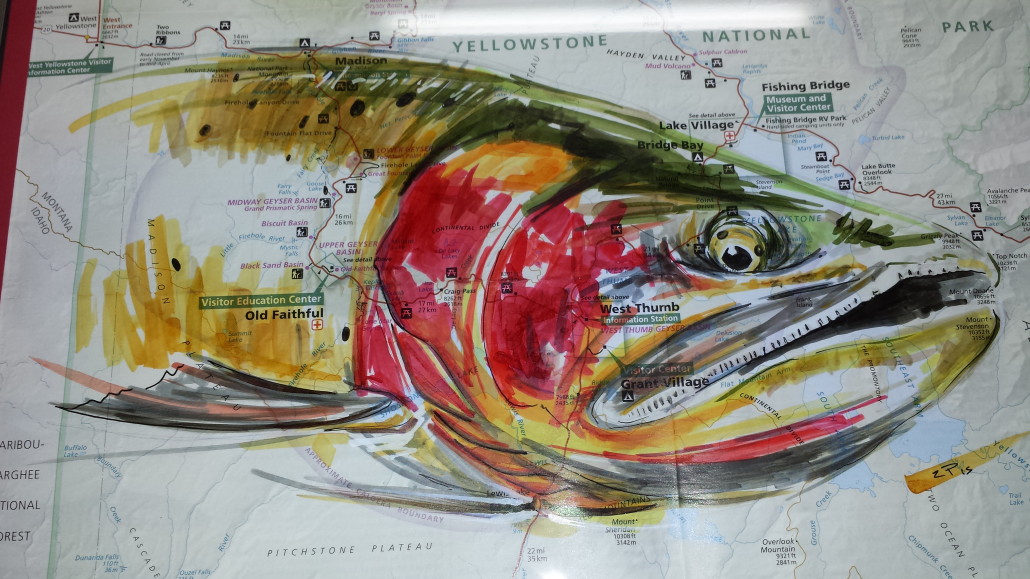
The Yellowstone and its tributaries are fishing very well. The Firehole and Madison remain warm are largely out of play for anglers. The Gibbon remains a productive option on the west side.
The Yellowstone River in YNP is in prime summer shape. The canyon reaches of the river are fishing very well, with a variety of attractor and terrestrial dry fly patterns. The river is now open above the falls, offering anglers opportunities to sight fish to large, native cutthroat. All of the Yellowstone’s tributaries are in great shape with excellent dry fly fishing on Slough and Soda Butte Creeks as well as on the Lamar River.
The Firehole and Madison in the park have warmed considerably and are no longer good options. The Gibbon River is fishing well along its entire length, providing a good option for anglers on the west side of the park.
Give us a call (800-423-4742) to discuss planning your own trip to fish Yellowstone National Park.
Dries: Adams #18-20, Sparkle Dun – Olive (baetis), Yellow (PMD) #18-20, Purple Haze #18-20, Light Cahill #16-18
Nymphs: Pheasant Tail #18-20, Soft-Hackle Pheasant Tail #18-20, CDC Emerger #18-20, Partridge & Olive Soft Hackle #18-20, Lightning Bug #18-20, WD-40 #18-20, RS-2 #18-20, Pat’s Rubber Leg #8

